Creations — Articles
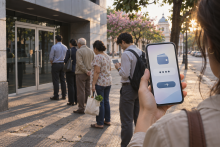
On Monday evening, Ueno Bank's depositors in Paraguay could spend the money in their accounts. On Tuesday morning, after the central bank announced shortly after three that it had taken the bank over, they could not. The bank still owed its depositors. Their cards had stopped working. That is the point. A bank balance is not money you hold. It is a promise somebody else has to keep, and when they can't, somebody else decides how much you get back, and when.
Bitcoin (BSV) held in a wallet only you control is a different kind of thing. It is nobody's promise. No bank stands between you and it, so no bank's bad loans, thin capital or friendly regulator can stop you sending it on Tuesday morning. You do not wait for a guarantee fund, a list of who gets paid first, or a law written that week. You can check for yourself, on a public ledger, that your BSV has not been spent. That is the reason to take Bitcoin seriously: not as a bet on a price, but as a way to hold some of your money in a form that does not depend on anybody else's balance sheet. The way to start is the way money is meant to be used: earn some, spend some, keep some.
It is not a free lunch. You must keep your wallet's secret code safe, the price can fall, few shops accept BSV yet, and its network has its own rules for freezing specific coins. The article sets all of that out. A BSV freeze has to target specific coins. Ueno's failure stopped every one of its 1.8 million depositors at once, without anyone having to accuse them of anything.