Why the World Needs Bitcoin (BSV)
 Open for submissions
Money that serves the people who earn it.
Money is supposed to serve the people who earn it. Too often it does the opposite. Inflation quietly eats savings. Corruption hides where public money goes. Banks fail, and governments and institutions that promised to protect people’s wealth don’t. And the power to create money gives those who hold it a head start over everyone who has to work for it.
This Feature gathers articles that look at these problems through real events and ask what Bitcoin (BSV) changes: money with a fixed supply that no government or bank can expand, a public record anyone can check, and savings you hold yourself rather than as somebody else’s promise. Each piece is honest about what BSV does not fix. Read them, weigh them, and decide for yourself.
For writers
What we're looking for
- Inflation: how rising prices and expanding money supplies erode savings and wages, with real figures from real countries, and what money with a fixed supply changes.
- Corruption: cases where public or private money disappeared, was misused or could not be traced, and how a public ledger could make money harder to hide.
- Failures of governments, banks and financial systems: bank collapses, frozen accounts, mismanaged pension funds, broken payment systems, and the people they left waiting.
- Failures to protect citizens and their wealth: deposit guarantees that fell short, savings wiped out, capital controls, confiscations, and who paid the price.
- Who benefits from creating money: how new money reaches some people before others, how inflation moves wealth from those who earn and save to those closest to its creation, and what an economy looks like when nobody can print more.
- Practical use: earning, spending and holding BSV in a wallet you control, and stories from people already doing it.
- Writing from where it happened: people describing what they saw in their own town or country.
- Facts with sources, opinion clearly marked as opinion, and honesty about BSV’s limits: price swings, keeping your private key safe, how few places accept BSV yet, and the network’s own rules.
- Essays, explainers, news reports, history and personal accounts.
What isn't included
- Price predictions, charts, trading tips or “buy now” calls. This Feature is about BSV as money people use, not as a bet.
- Investment advice of any kind.
- Accusing named people of crimes or wrongdoing that has not been established. Report what is known, and say what is alleged.
- Blaming any ethnic, religious or national group for how money works. Criticise systems, institutions and decisions, not peoples.
- Conspiracy claims without evidence. Strong arguments need sources; the strongest need the most.
- Writing that treats other people’s losses as a punchline or a sales pitch.
- Product announcements without the wider point. Those belong in BSV News & Announcements.
- Articles mainly about other coins.
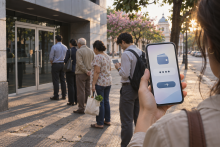
Editor's pick: Paraguay’s Bank Froze. BSV in Your Own Wallet Did Not
On Monday evening, Ueno Bank's depositors in Paraguay could spend the money in their accounts. On Tuesday morning, after the central bank announced shortly after three that it had taken the bank over, they could not. The bank still owed its depositors. Their cards had stopped working. That is the point. A bank balance is not money you hold. It is a promise somebody else has to keep, and when they can't, somebody else decides how much you get back, and when.
Bitcoin (BSV) held in a wallet only you control is a different kind of thing. It is nobody's promise. No bank stands between you and it, so no bank's bad loans, thin capital or friendly regulator can stop you sending it on Tuesday morning. You do not wait for a guarantee fund, a list of who gets paid first, or a law written that week. You can check for yourself, on a public ledger, that your BSV has not been spent. That is the reason to take Bitcoin seriously: not as a bet on a price, but as a way to hold some of your money in a form that does not depend on anybody else's balance sheet. The way to start is the way money is meant to be used: earn some, spend some, keep some.
It is not a free lunch. You must keep your wallet's secret code safe, the price can fall, few shops accept BSV yet, and its network has its own rules for freezing specific coins. The article sets all of that out. A BSV freeze has to target specific coins. Ueno's failure stopped every one of its 1.8 million depositors at once, without anyone having to accuse them of anything.
On the evening of 29 October 2026, about six billion dollars left Binance's wallets across ten blockchains, most of it in twenty minutes. Nobody is yet sure how. What is sure is that no blockchain failed: a company's signing system was made to sign, and it did. The largest theft in the history of the industry was a company hack.
This article is in two parts. The first says what happened, in as few numbers as the point needs, and why it was always going to happen to somewhere like Binance: what a honeypot is, why a custodial exchange is the purest one there is, and why "your wallet is no safer than theirs" misses the point entirely.
The second part is about us. When we built Creations on BSVSearch, we decided it would never hold anybody's money: your wallet pays the writer directly, and the platform separately. That choice has costs, and I name them: why you pay two parties instead of one, what happens when someone sends the wrong amount, and what the writer must look after themselves. It also makes buying an article slightly more awkward than it could be. We accepted that, because the alternative is to put ourselves in the middle of your money, and the whole point of peer-to-peer electronic cash is that nobody needs to be there.